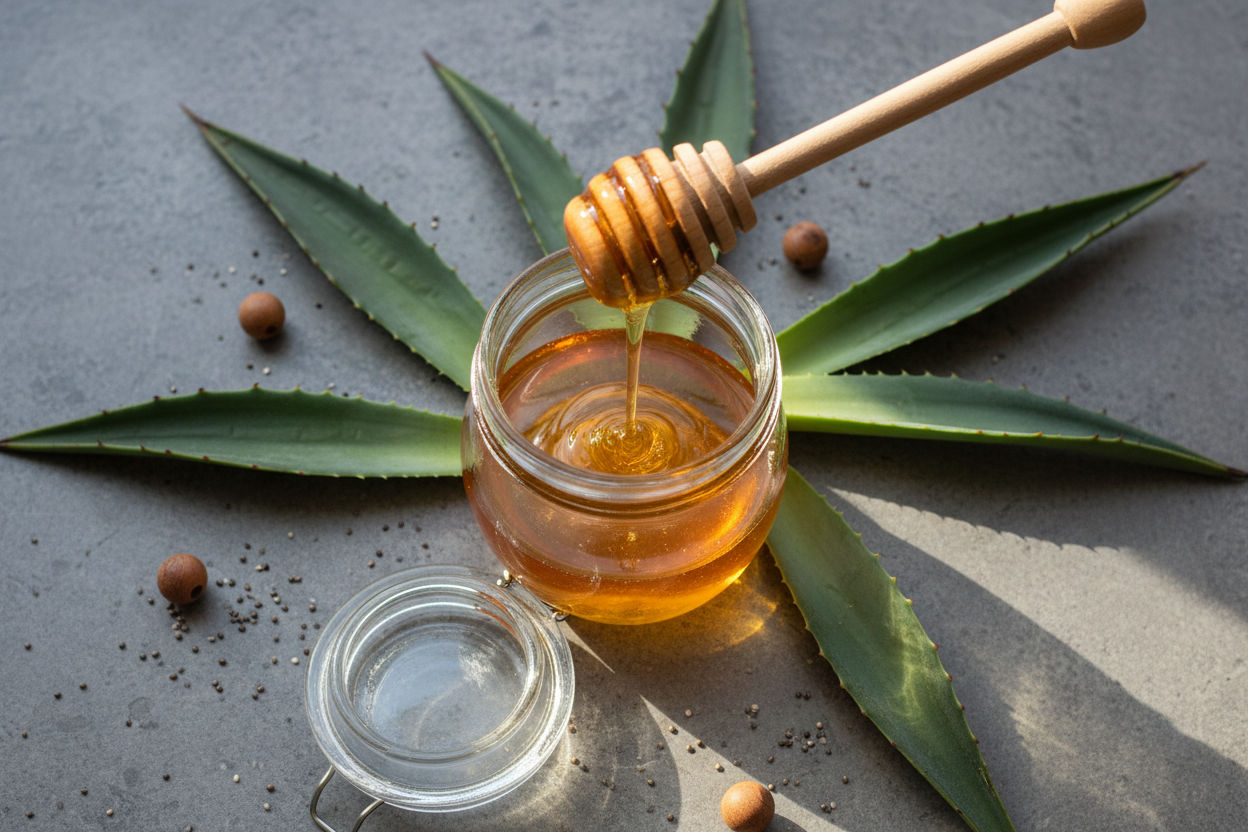
In the modern food manufacturing, beverage formulation, and culinary arts sectors, Wholesale Organic Agave Nectar (Agave tequilana Weber) serves as a foundational liquid sweetener. Valued for its high fructose composition, remarkable water solubility, low glycemic load, and clean, neutral sweetness profile, agave syrup is heavily integrated into commercial products—spanning organic plant-based beverages, sports energy gels, artisanal condiments, baked goods, and functional confectionery.
However, procuring commercial quantities of agave nectar presents distinct technical and quality assurance challenges for B2B buyers. Procurement directors and supply chain managers must evaluate thermal hydrolysis methods, guard against economic adulteration with high-fructose corn syrup (HFCS) or cane sugar, ensure low hydroxymethylfurfural (HMF) levels, and secure reliable supply chains from certified organic regions in Mexico.
This technical buyer’s guide provides an exhaustive analysis of commercial organic agave nectar procurement—analyzing plant cultivation, carbohydrate chemistry, enzymatic processing, COA testing parameters, and commercial formulation applications.
1. Botanical Origins & Extraction Mechanics: Blue Weber Agave Processing
The commercial quality of organic agave nectar is fundamentally dictated by its botanical origin and the mechanical extraction of the plant’s core carbohydrate reserve.
                   [ Agave Tequilana Weber (Blue Agave) Harvest ]
                                         │
                                         ▼
                     [ Extraction of Inulin-Rich Piña Core ]
                     • High natural concentration of agavins (fructans)
                                         │
                                         ▼
            [ Controlled Thermal or Enzymatic Hydrolysis (<70°C) ]
                     • Converts complex fructans into free fructose & glucose
                                         │
                                         ▼
       ┌─────────────────────────────────┴─────────────────────────────────┐
       ▼                                                                   ▼
[ Light Organic Agave Nectar ]                      [ Dark Organic Agave Nectar ]
• Filtered to remove residual solids                • Unfiltered, longer thermal cooking
• Neutral, mild sweetness (30–40 ICUMSA)            • Rich, caramel notes (1000+ ICUMSA)
The Inulin Hydrolysis Pathway
The core of the mature Blue Weber agave plant (the piña) stores energy in the form of agavins—complex, highly branched polymers of fructose molecules linked by $\beta$-(2,1) and $\beta$-(2,6) glycosidic bonds. Because raw agavins are non-digestible dietary fibers, they must undergo controlled hydrolysis to produce liquid agave nectar:
-
Thermal Hydrolysis: Raw agave juice is heated ($60^\circ\text{C} – 80^\circ\text{C}$) under mild acidic conditions to cleave the fructan chains into free fructose and glucose units.
-
Enzymatic Hydrolysis: Advanced organic processors utilize natural inulinase enzymes at lower temperatures to achieve precise carbohydrate ratios without generating thermal breakdown byproducts like hydroxymethylfurfural (HMF).
-
Evaporation & Concentration: The clarified liquid is concentrated under vacuum pressure to a standardized density of 74° to 76° Brix, ensuring physical stability and preventing microbiological growth during bulk storage.
2. Carbohydrate Chemistry & Bioactive Specifications
To properly evaluate wholesale organic agave nectar, procurement managers must understand its distinct carbohydrate composition and physical properties:
| Chemical / Quality Benchmark | Target B2B Specification Range | Analytical Method | Primary Industrial Relevance |
| Brix Concentration | $74.0^\circ – 76.0^\circ\text{ Brix}$ | Refractometry | Ensures osmotic pressure to prevent yeast/mold growth |
| Fructose Ratio | $70.0\% – 85.0\%$ of total sugars | HPLC / HPICE | High sweetening power (~1.4x sweeter than sucrose) |
| Glucose Ratio | $15.0\% – 25.0\%$ of total sugars | HPLC / HPICE | Controls crystallization kinetics and viscosity |
| Hydroxymethylfurfural (HMF) | $\le 40\text{ mg/kg}$ ($\le 20\text{ mg/kg}$ premium) | Spectrophotometry / HPLC | Primary indicator of thermal damage and heat degradation |
| Glycemic Index (GI) | $15 – 25\text{ GI}$ | Clinical Assays | Low glycemic response for healthy food & beverage lines |
┌────────────────────────────────────────────────────────────────────────┐
│                   CARBOHYDRATE RATIO COMPARISON                        │
├────────────────────────────────────────────────────────────────────────┤
│ • High Fructose Density: Delivers immediate sweetness perception       │
│   while allowing formulators to reduce total sugar mass by 20–30%.      │
│ • Low Glucose Content: Prevents unwanted sugar crystallization in     │
│   cold-stored beverages, ice creams, and liquid syrups.                │
└────────────────────────────────────────────────────────────────────────┘
To review complete technical specifications, batch certificates of analysis, and commercial bulk order tiers, explore Impact Foods Agave Nectar Wholesale Supply.
For consumer retail lines, organic functional food products, and retail superfood items, inspect the full selection at Yin Yang Superfoods.
3. Quality Control & Adulteration Testing in Bulk Procurement
Because liquid sweeteners are susceptible to adulteration with inexpensive corn syrups or invert sugar, stringent third-party testing is essential when vetting bulk agave suppliers.
                                [ B2B VENDOR AUDIT CHECKLIST ]
                                             │
                          ┌──────────────────┴──────────────────┐
                          ▼                                     ▼
            [ Non-Compliant / High-HMF Batch ]           [ Certified Organic Bulk Standard ]
            (High HMF >80mg/kg, HFCS adulteration risks) (Low HMF ≤20mg/kg, 100% Blue Agave, low GI)
                          │                                     │
                          ▼                                     ▼
            • Risk of legal recall & off-flavors          • Clean sweetness & high thermal stability
            • Darkened color & thermal degradation       • Natural low glycemic performance
            • Elevated C4 carbon isotope ratios           • 100% pure Blue Weber origin COA
Critical Testing Protocols
-
Stable Isotope Ratio Mass Spectrometry ($\text{EA-IRMS}$ / $\text{C13}$): Measures $\delta^{13}\text{C}$ isotopic signatures to detect adulteration with $\text{C}_4$ plant sugars (such as corn syrup or cane sugar). Pure agave demonstrates a characteristic $\text{CAM}$ plant isotopic profile.
-
High-Performance Anion-Exchange Chromatography (HPAEC-PAD): Verifies the absence of oligosaccharides typical of starch hydrolysis, confirming zero high-fructose corn syrup addition.
-
Pesticide Multi-Residue Screen: Confirms compliance with organic farming standards, verifying zero synthetic pesticide or herbicide residues.
4. Commercial Formulation Applications
Organic agave nectar offers unique physical and functional advantages across major food manufacturing sectors:
┌────────────────────────────────────────────────────────────────────────┐
│                   COMMERCIAL FORMULATION MATRIX                        │
├────────────────────────────────────────────────────────────────────────┤
│ 1. Beverage Formulations: Highly soluble in cold liquids; does not      │
│    settle out or crystallize in iced teas, kombuchas, or cold brews.   │
│ 2. Bakery & Energy Bars: Serves as a natural humectant that retains    │
│    moisture, extending product shelf-life and crumb softness.          │
│ 3. Plant-Based Dairy Alternatives: Provides clean sweetness in oat and │
│    almond milks without masking delicate plant-base flavors.           │
└────────────────────────────────────────────────────────────────────────┘
To secure verified, certified organic commercial supply for your processing facility, order directly through Impact Foods Agave Nectar B2B Wholesale, and explore consumer retail products at Yin Yang Superfoods.
Frequently Asked Questions (FAQ)
How Does Agave Nectar Compare to High-Fructose Corn Syrup (HFCS)?
While both contain fructose and glucose, organic agave nectar is derived from the natural fructan storage of the agave plant via gentle temperature processing without chemical isomerization. Furthermore, agave nectar features a higher fructose ratio ($\sim 75\%$), making it naturally sweeter so formulators can use smaller quantities.
What Is the Difference Between Light and Dark Agave Nectar?
Light agave nectar undergoes fine filtration and shorter heating times, producing a neutral, light-golden syrup ($30-40\text{ ICUMSA}$) that adds sweetness without altering product color or flavor. Dark agave nectar is less filtered and heated longer, yielding a dark, rich syrup ($1000+\text{ ICUMSA}$) with distinct caramel undertones suitable for rich baked goods, sauces, and dark beverages.
What Is the Recommended Storage Protocol for Bulk Agave Nectar?
Bulk agave nectar should be stored in food-grade, stainless steel IBC totes, dark plastic drums, or heavy-duty pails. Maintain ambient storage temperatures between $15^\circ\text{C}$ and $25^\circ\text{C}$ away from direct sunlight. Under proper storage, bulk agave nectar maintains its quality, color stability, and Brix specification for 24 months.
Streamline Your Bulk Organic Sweetener Supply
Whether you are scaling a commercial beverage line, formulating low-glycemic functional foods, or developing premium plant-based confections, sourcing certified organic, low-HMF agave nectar ensures superior taste, outstanding physical performance, and full regulatory compliance.
Ready to partner with an established B2B supplier? Request product spec sheets, batch COAs, and wholesale quotes directly through Impact Foods Agave Nectar B2B Wholesale, and inspect consumer nutrition lines at Yin Yang Superfoods!