In the competitive landscape of UK health foods and manufacturing, finding an ingredient that bridges the gap between “indulgent” and “functional” is rare. We have seen the rise of Goji berries, the dominance of Chia, and the ubiquity of Cacao. But for 2026, the spotlight is turning toward an ancient fruit that has been quietly powering Silk Road civilizations for millennia: The White Mulberry.
For B2B buyers, NPD (New Product Development) managers, and food technologists, Organic Dried White Mulberries represent a unique opportunity. They are not just another dried fruit; they are a “smart sweetener,” a texture enhancer, and a nutritional powerhouse that outperforms traditional pantry staples like raisins and dates.
At Impact Foods, we are seeing a surge in demand for our premium, sun-dried Turkish White Mulberries. This guide will explain exactly why they are poised to become a staple in the UK’s “Clean Label” revolution, exploring their biochemistry, supply chain sustainability, and untapped potential in modern food manufacturing.
1. The “Better Raisin”: A Nutritional & Functional Upgrade
For decades, the raisin has been the default inclusion for bakery, cereals, and snack bars. It is cheap, available, and sweet. However, the modern health-conscious consumer is increasingly wary of the high sugar spikes associated with traditional dried vine fruits.
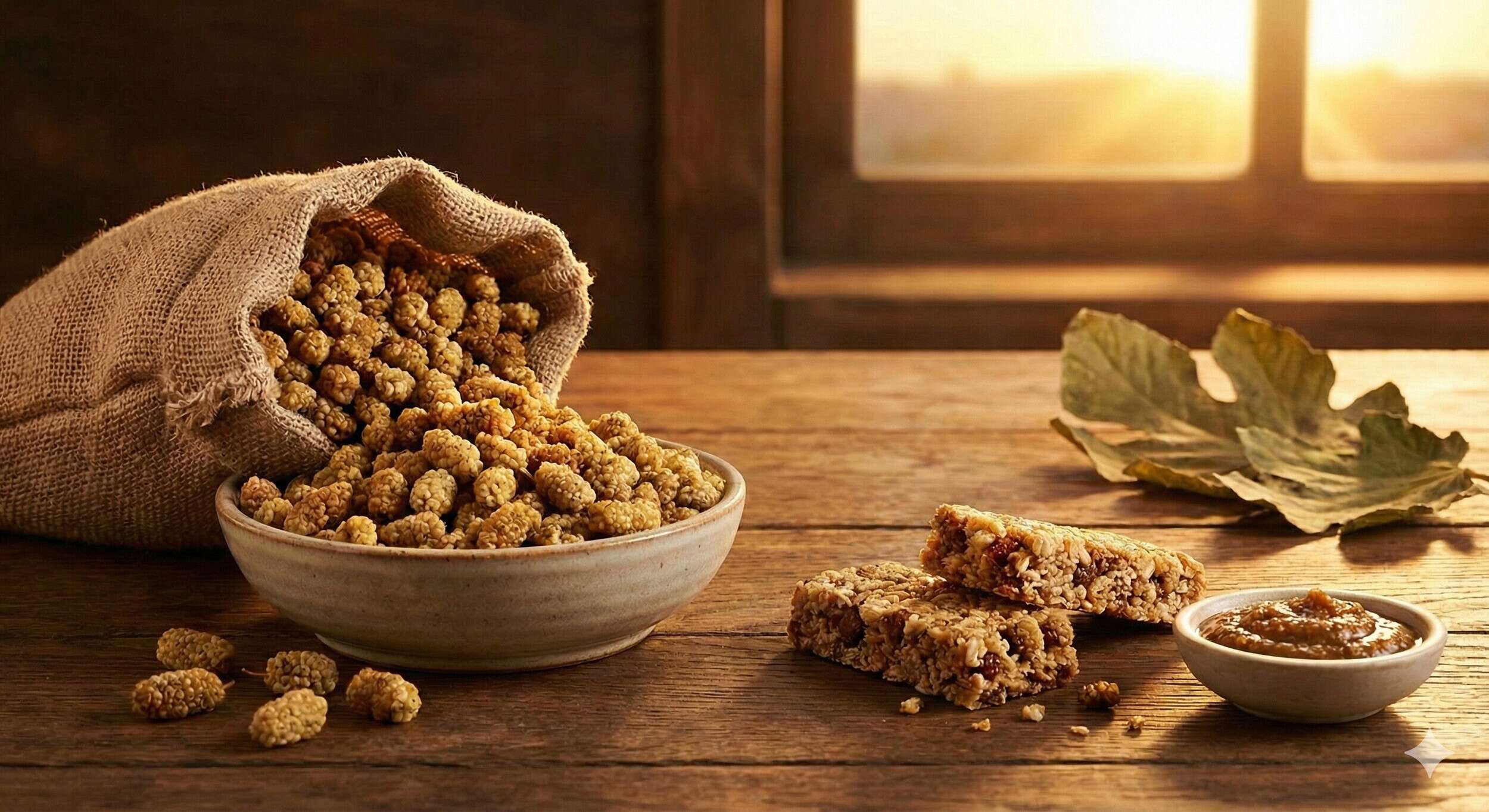
White Mulberries (Morus alba) offer a superior alternative. To the consumer palette, they offer a complex flavour profile—often described as “toffee-like,” “vanilla-scented,” or reminiscent of honeycomb. But beneath this indulgent taste lies a biochemical profile that solves many of the problems associated with high-sugar dried fruits.
The Glycemic Advantage: 1-DNJ
The most critical competitive advantage of the White Mulberry is a compound called 1-Deoxynojirimycin (1-DNJ).
While most dried fruits cause a rapid spike in blood glucose, White Mulberries contain this unique iminosugar, which is rarely found in such concentrations in nature. 1-DNJ functions as an alpha-glucosidase inhibitor. In simple terms, it inhibits the enzymes in the gut that break down carbohydrates into glucose.
For the Formulator: This means you can create a snack bar or granola that tastes incredibly sweet but has a significantly lower glycemic impact than one sweetened with dates or raisins. This is a massive claim-enabler for brands targeting the Diabetic-Friendly, Keto-Lite, or Low-GI markets.
The Iron & Antioxidant Heavyweight
When we compare the micronutrient density of White Mulberries to standard dried fruits, the difference is stark.
- Iron Content: Mulberries are one of the few fruits that contain significant amounts of non-heme iron (approx. 1.85mg per 28g serving). This makes them an essential ingredient for Plant-Based/Vegan formulations where iron deficiency is a common consumer concern.
- Resveratrol: Famous for being the “heart-healthy” compound in red wine, Resveratrol is actually found in higher concentrations in dried mulberries than in many grape varieties. This allows for powerful “Heart Health” and “Anti-Aging” marketing narratives on packaging.
- Vitamin C: Unlike raisins, which contain negligible Vitamin C, air-dried mulberries retain a good portion of this heat-sensitive vitamin, supporting immunity claims.
2. Supply Chain & Origin: The Turkish Gold Standard
At Impact Foods, we believe that “Superfood” status is defined by the quality of the supply chain. Our White Mulberries are sourced from the fertile valleys of Turkey, the historical heartland of Morus alba cultivation.
Why Turkey?
Turkey is the global leader in high-quality mulberry production for a reason. The climate offers the perfect synergy of mineral-rich soil and intense, dry heat.
- Sun-Drying Perfection: Our mulberries are not oven-dried. They are allowed to dry naturally under the Aegean sun. This slow drying process preserves the enzymes and temperature-sensitive phytonutrients (like Vitamin C) that are often destroyed in industrial tunnel dryers used for cheaper fruits.
- Certified Organic: We supply 100% Certified Organic mulberries. In conventional mulberry farming, pesticides are sometimes used to protect the fruit from pests. By sourcing Organic, we ensure that your finished product—whether it’s a baby food puree or a premium protein bar—is free from chemical residues.
The Sustainability Story
For brands building an eco-conscious image, the Mulberry tree is a powerful ally.
- Drought Resistance: Unlike almond trees, which require vast amounts of water, established mulberry trees are incredibly drought-tolerant. They require minimal irrigation, making them a “Water-Wise” crop for a changing climate.
- No Monoculture: In Turkey, mulberry trees are often grown in diverse agricultural ecosystems rather than destructive monocultures.
- The Carbon Sink: The large, broad leaves of the mulberry tree are exceptionally efficient at carbon sequestration.
3. Technical Applications in Manufacturing
For the food technologist, the White Mulberry is a versatile “problem solver” in the lab. Here is how you can utilize Impact Foods’ bulk mulberries in various sectors:
A. The “Toffee” Binder in Snack Bars
One of the biggest challenges in “Clean Label” bar manufacturing is finding a binder that isn’t a syrup or a date paste.
- The Problem with Dates: Date paste is delicious but dark in colour and overpowering in flavour. It turns everything brown and tastes distinctly of… dates.
- The Mulberry Solution: When milled into a paste, White Mulberries remain light in colour (golden/beige). Their flavour is more neutral and vanilla-forward. This allows you to create Blonde Energy Balls, Lemon & Poppyseed Bars, or Vanilla Protein Bars without the dark colour or heavy taste of dates interfering.
B. Texture in Granolas & Cereals
Raisins can become rock-hard in granola clusters, or too chewy in muesli. Dried Mulberries have a unique texture—they are chewy yet slightly crunchy (due to the tiny seeds inside).
- Moisture Migration: Mulberries have a lower water activity than prunes or apricots. This means they are less likely to cause moisture migration issues that make cereal flakes soggy. They keep your product crunchy for longer.
C. Confectionery & Chocolate Coating
The “Chocolate Coated Superberry” market is booming.
- Shape & Size: Impact Foods supplies whole, intact berries. Their irregular, elongated shape holds chocolate coating exceptionally well (better than the smooth skin of a cranberry). The “nooks and crannies” of the berry allow for a high chocolate-to-fruit ratio.
- Flavour Pairing: The natural honey/vanilla notes of the mulberry pair perfectly with Raw Cacao, preventing the bitterness of high-percentage dark chocolate from becoming overwhelming.
D. Natural Sweetener for Beverages
We are seeing innovative uses of Mulberry Powder (which can be milled from our dried berries).
- Sugar Replacement: In functional lattes or smoothie blends, mulberry powder adds sweetness without the “refined sugar” label. It pairs beautifully with Matcha, Turmeric, and Chai spices.
4. Market Trends: The UK Landscape in 2026
Why should you list Mulberries in your NPD pipeline now?
The “Glucose Goddess” Effect
There is a massive consumer movement, driven by social media influencers and biochemists, focusing on Blood Sugar Balancing. Consumers are actively seeking snacks that don’t cause the “3 PM Slump.” The 1-DNJ content in mulberries makes them the perfect hero ingredient for this trend.
The “Paleo” & “Grain-Free” Shift
While Keto has stabilized, the broader “Grain-Free” and “Paleo” movements are growing. Mulberries are compliant with almost every modern diet:
- Paleo: Yes
- Vegan: Yes
- Gluten-Free: Yes
- Raw: Yes (due to sun-drying) This universal compliance simplifies your inventory; one fruit ingredient serves all your SKUs.
Functional Snacking for Kids
The baby and toddler food market is desperate for low-GI sweeteners. Parents are moving away from raisins due to dental concerns (stickiness) and sugar content. Mulberries are less sticky and offer a gentler sugar profile, making them ideal for Toddler Fruit Snacks and School Lunchbox Bars.
5. Formulation Ideas: Get Started
Need inspiration? Here are three concept ideas using Impact Foods Organic Mulberries:
- “Golden Milk” Recovery Bar:
- Base: Cashews & Milled White Mulberries (binder).
- Actives: Turmeric, Black Pepper, Ginger.
- Why it works: The vanilla notes of the mulberry enhance the creaminess of the turmeric latte flavour profile.
- Diabetic-Friendly “Toffee” Popcorn:
- Coating: Mulberry syrup (made by soaking and blending mulberries) + a pinch of sea salt.
- Why it works: Creates a low-GI, caramel-flavoured coating without refined sugar or artificial sweeteners.
- Superfood Trail Mix (The “Antioxidant” Mix):
- Mix: Impact Foods Cacao Nibs + Goji Berries + White Mulberries + Walnuts.
- Why it works: A visually stunning mix of dark brown, bright red, and golden white. High in Iron, Magnesium, and Resveratrol.
6. How to Buy: The Impact Foods Guarantee
Sourcing dried fruit can be risky. Issues with moisture control, fermentation, and foreign bodies (sticks/stones) are common in low-quality batches.
At Impact Foods, we mitigate these risks for our wholesale partners:
- Laser Cleaning: Our berries undergo rigorous cleaning processes to remove stalks and foreign matter.
- Moisture Control: We test every batch to ensure the water activity is safe for long-term storage, preventing mould growth in your warehouse.
- Bulk Availability: Whether you need a single 10kg case for a trial run or full pallets for a production launch, we have consistent stock levels in our UK warehouse.
Ready to Sample?
The only way to truly understand the “toffee” flavour profile of the White Mulberry is to taste it. We encourage all our B2B partners to request a trade sample.
Don’t let your competitors own the next superfood trend. Switch from raisins to the ancient power of the White Mulberry.
Request a Wholesale Quote for Organic Mulberries Contact Our NPD Team for Specification Sheets