The landscape of the UK food industry is shifting. As we settle into 2026, the “Clean Label” movement has evolved from a niche trend into a baseline manufacturing standard. Consumers are no longer just looking for “natural”; they are demanding functionality, traceability, and exciting new flavour profiles that bridge the gap between sweet and savory.
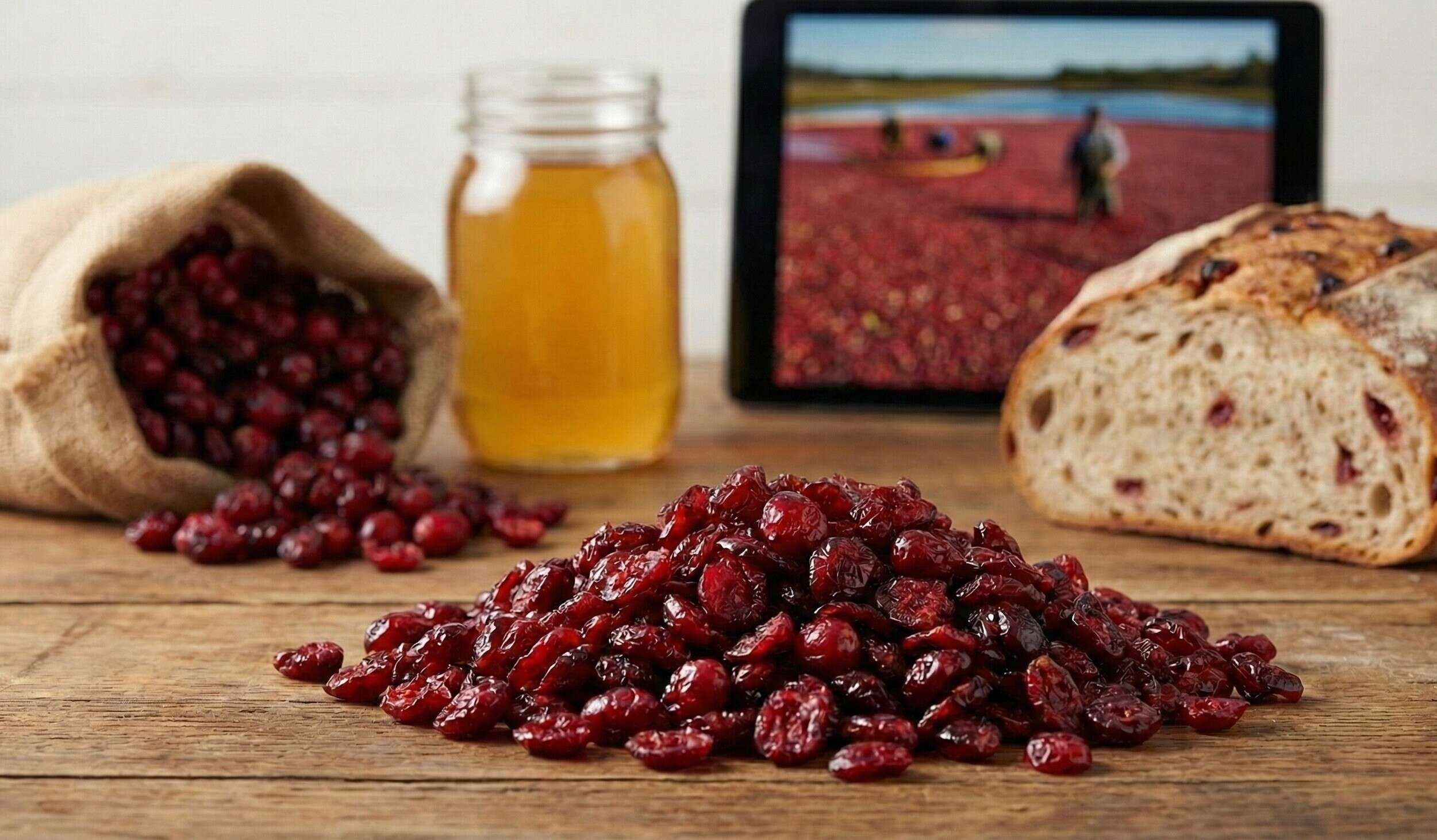
In this competitive environment, one ingredient is experiencing a renaissance: The Organic Cranberry (Vaccinium macrocarpon).
Once reserved for Christmas sauces and juice blends, the dried cranberry has emerged as a powerhouse ingredient for the modern formulator. It is the perfect answer to the sugar-reduction mandate and the “Swicy” (Sweet & Spicy) flavour trend currently dominating the snack aisle.
At Impact Foods, we are seeing a significant uptick in demand for our premium Canadian and US-grown organic cranberries. This guide is written for NPD managers, buyers, and food technologists who want to understand why this ruby-red fruit is the strategic ingredient choice for 2026.
1. The “Clean Label” Sweetener: Apple Juice vs. Sugar
One of the most critical decisions a buyer must make is the sweetener profile. Raw cranberries are naturally tart and require sweetening to be palatable. For 2026, the market is splitting into two distinct streams.
The Premium Choice: Apple Juice Sweetened (AJS)
This is our fastest-growing category. Our Organic AJS Cranberries are infused with organic apple juice concentrate rather than refined cane sugar.
- The “No Added Refined Sugar” Claim: This is the Holy Grail for health brands. By using apple juice, your ingredient deck remains “fruit-derived.” This is essential for:
- Toddler & Kids Snacks: Parents are actively avoiding white sugar in lunchbox bars.
- Paleo & Whole30 Products: Where refined sugars are strictly forbidden.
- Label Perception: “Cranberries, Apple Juice” looks significantly cleaner on a back-of-pack declaration than “Cranberries, Sugar.”
The Classic Choice: Organic Cane Sugar Sweetened
While AJS is trending, sugar-sweetened cranberries remain the industry standard for Bakery and Confectionery.
- Texture & Stability: Cane sugar creates a slightly firmer fruit structure that holds up better in high-moisture environments like muffins or sourdough loaves.
- Cost-Efficiency: For large-scale manufacturing where price point is critical, this remains the robust, reliable option.
2. Technical Specifications for Manufacturing
For the food technologist, the cranberry is more than just a fruit; it is a functional tool. Impact Foods supplies cranberries with specific technical parameters designed for industrial efficiency.
Low Water Activity (aW) & Shelf Life
Dried cranberries have a lower water activity (typically 0.45 – 0.55) compared to other dried fruits like apricots or prunes.
- Bakery Benefits: This ensures they do not cause “moisture migration” in cereals or granola. Your flakes stay crunchy, and the fruit stays chewy.
- Natural Preservation: Cranberries naturally contain Benzoic Acid, a compound that acts as a natural preservative. This helps inhibit mould and yeast growth in finished products, extending the shelf life of your snack bars naturally.
Heat Stability & Bleed Resistance
Unlike blueberries which can sometimes “bleed” into dough, turning a muffin grey, cranberries possess a robust skin and firm flesh.
- Visual Appeal: They retain their bright ruby-red integrity even after baking. In 2026, where “Instagrammable” aesthetics drive food trends, this pop of colour is invaluable for cookies, scones, and artisan breads.
3. The 2026 Flavour Trend: “Swicy” & Umami
If 2024 was the year of Salted Caramel, 2026 is the year of “Swicy” (Sweet + Spicy) and Umami pairings. The cranberry’s natural acidity makes it the perfect carrier for these complex profiles.
NPD Concept: The “Swicy” Trail Mix
Consumers are seeking complex, adult flavour profiles.
- The Idea: Coat Impact Foods Organic Cranberries in a Chili & Lime dust or a Hot Honey glaze.
- Why it works: The tartness of the cranberry cuts through the heat of the chili, creating a multi-sensory experience that is highly addictive and on-trend.
NPD Concept: Savory Umami Inclusions
We are seeing a rise in “Savory Granola” and plant-based meat alternatives.
- The Idea: Use Diced Cranberries in a Sage & Onion Stuffing ball or a Plant-Based Turkey Burger.
- Why it works: The acidity of the cranberry balances the rich, umami notes of soy protein or roasted nuts, mimicking the classic “Sunday Roast” flavour profile in a convenient, modern format.
4. Functional Health: The “Superfruit” Halo
While EU and UK regulations regarding health claims are strict (specifically regarding UTIs), the cranberry still carries a massive “Health Halo” that consumers recognize and trust.
The PACs Powerhouse
Cranberries are rich in Proanthocyanidins (PACs), specifically A-Type PACs, which are unique to this fruit.
- Marketing Angle: While you must be careful with medical claims, you can highlight the High Antioxidant content.
- Immunity Support: Dried cranberries retain a source of Vitamin C. In a post-pandemic world, “Immune Support” remains a top-three driver for snack purchases.
Gut Health & Fiber
With the explosion of the “Gut Health” trend, fiber is king.
- Prebiotic Potential: The fiber in cranberries (approx. 5g per 100g) acts as a fuel for beneficial gut bacteria. Pairing cranberries with prebiotic fibers like chicory root or oats creates a powerful “Gut-Loving” marketing story for your breakfast range.
5. Bakery Trends 2026: The “Hybrid” & Sourdough
The bakery sector is evolving toward “Hybrid Bakes” and “Elevated Classics.”
Sourdough Inclusions
Sourdough is no longer just for plain toast. The market is moving toward sweet/savory sourdough loaves.
- The Trend: Cranberry & Walnut Sourdough or Cranberry & Earl Grey Tea Loaves.
- Why Cranberries? Raisins are often seen as “old fashioned.” Cranberries offer a modern, premium tartness that cuts through the lactic tang of the sourdough starter, creating a sophisticated flavour profile.
The “Cruffin” & Pastry
In the world of laminated pastry (croissants, danishes), bakers are looking for fillings that aren’t just jam.
- The Application: Whole dried cranberries provide a “burst” of texture inside a Cruffin (Croissant-Muffin hybrid) that a puree cannot offer.
6. Sourcing & Sustainability: The Impact Foods Standard
In 2026, supply chain transparency is not optional; it is a requirement. Buyers need to know exactly where their fruit comes from to satisfy their own CSR (Corporate Social Responsibility) goals.
- North American Origin: We source primarily from the pristine bogs of Canada and the USA. These regions set the global standard for cranberry cultivation.
- Certified Organic: Our cranberries are certified by leading UK bodies. This guarantees no synthetic pesticides or herbicides were used, protecting the water tables in the growing regions.
- Reliable Supply: Unlike some exotic superfoods which suffer from volatile supply chains, the established North American cranberry industry offers stability, allowing you to plan your production schedules with confidence.
7. Conclusion: Future-Proof Your Range
The humble cranberry has graduated. It is no longer just a side dish; it is a functional, technical, and flavour-forward ingredient that answers the biggest consumer demands of 2026.
Whether you are formulating a “Swicy” snack bar, a “Clean Label” toddler treat, or an artisan sourdough, Organic Dried Cranberries offer the versatility and premium perception you need.
Don’t rely on outdated ingredients. Formulate for the future with the Red Ruby of the North.
Request a Wholesale Quote for Organic Cranberries Contact Our Technical Team for Specification Sheets
Appendix: Quick Specs (Typical)
- Formats: Whole, Diced (5-7mm), Double Diced.
- Sweeteners: Organic Apple Juice Concentrate OR Organic Cane Sugar.
- Origin: USA / Canada.
- Certifications: Organic, Kosher available.
- Packaging: 11.34kg (25lb) Bulk Cartons.