The global war on sugar has moved into a new phase. We have passed the era of artificial sweeteners (aspartame, sucralose) and are currently navigating the era of sugar alcohols (erythritol, xylitol). But as we settle into 2026, a new demand is emerging from the health-conscious consumer: Sweeteners with Function.
Consumers no longer just want “less sugar”; they want ingredients that actively improve their health while satisfying their sweet tooth. They want “Gut Health.” They want “Low GI.” They want “Plant-Based Whole Foods.”
There is one ingredient that ticks every single one of these boxes, yet remains underutilized in the mainstream UK market: Organic Yacon Syrup.
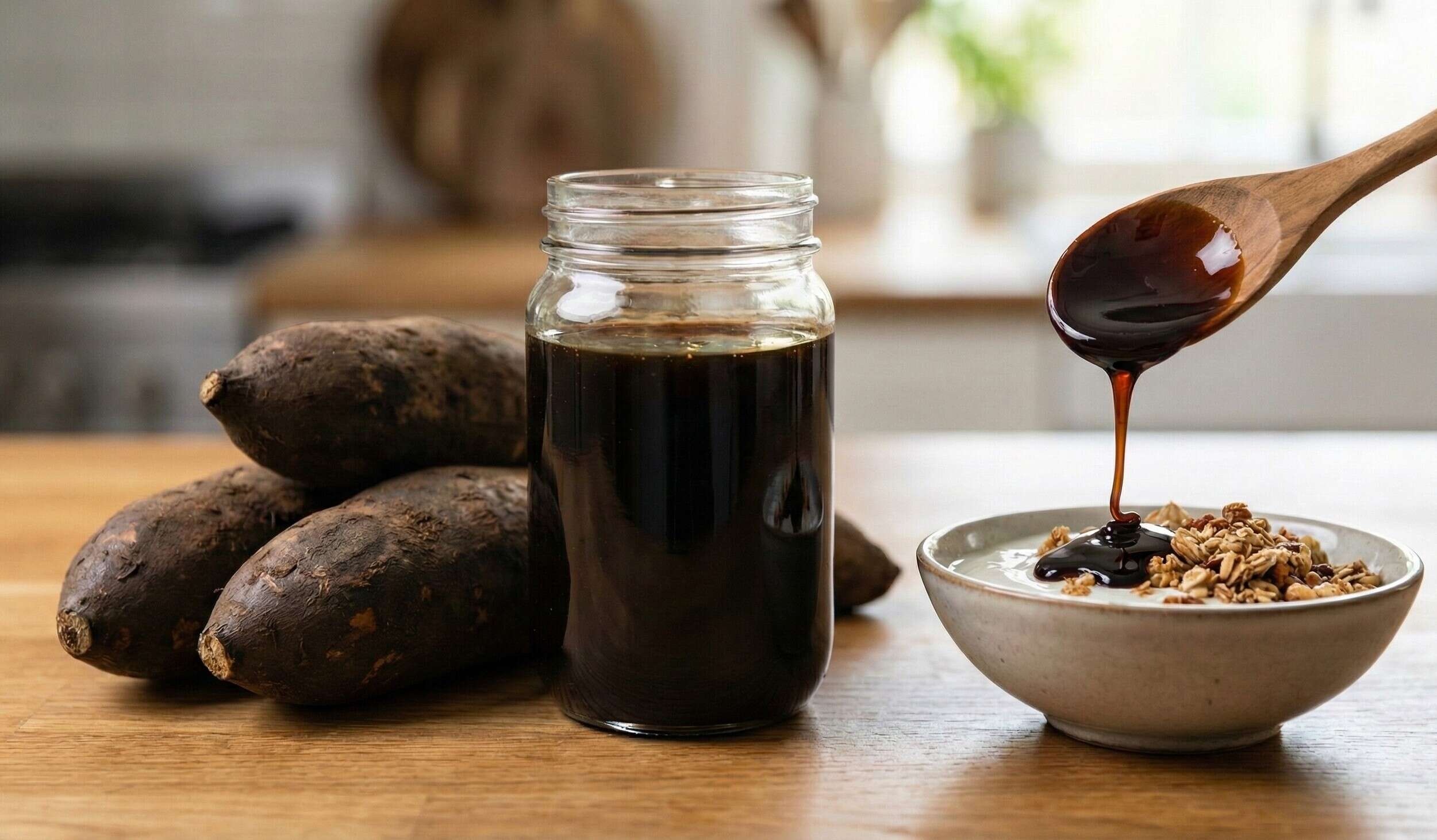
Extracted from the tuberous roots of the Smallanthus sonchifolius plant native to the Andes, Yacon Syrup is being hailed by food scientists and nutritionists as the “Holy Grail” of natural sweeteners. It offers the rich, caramel-like flavour of molasses but with half the calories of sugar and a potent dose of prebiotic fibre.
At Impact Foods, we have secured a premium supply of organic Peruvian Yacon Syrup. This guide is written for New Product Development (NPD) managers, buyers, and brand owners who are ready to lead the next wave of functional food innovation.
1. The Biochemistry of Yacon: Understanding FOS
To understand why Yacon Syrup is revolutionizing the sweetener market, we must look at its chemistry. Unlike honey or maple syrup, which are composed primarily of simple sugars (glucose, fructose, sucrose), Yacon Syrup is composed primarily of Fructooligosaccharides (FOS).
What is FOS?
FOS is a type of carbohydrate that the human body cannot fully digest.
- The Flavour Trick: FOS tastes sweet on the tongue (about 70% as sweet as cane sugar).
- The Digestive Bypass: Because the human body lacks the enzymes to break down FOS, it passes through the stomach and small intestine undigested.
- The Caloric Deficit: This means a significant portion of the syrup does not contribute calories to the body. Yacon Syrup typically contains around 197 kcal per 100g, compared to sugar at ~400 kcal and honey at ~304 kcal.
The Prebiotic Payload
When the undigested FOS reaches the large intestine, it performs its most critical function: it ferments. FOS is a Prebiotic Fibre. It acts as food for beneficial gut bacteria, specifically Bifidobacteria and Lactobacilli.
- Microbiome Support: By feeding these “good” bacteria, Yacon Syrup helps improve overall gut health, immunity, and regularity.
- Short-Chain Fatty Acids (SCFAs): The fermentation process produces SCFAs like butyrate, which are crucial for colon health and reducing inflammation.
For the Formulator: This allows you to create products that are not just “Low Sugar” but are actively “Gut Friendly.” You are turning a sweetener—usually the “villain” of the ingredient list—into a functional “hero.”
2. The Glycemic Index (GI) Advantage
In the UK, the diabetic and pre-diabetic demographic is growing, alongside the “Glucose Goddess” movement which encourages keeping blood sugar curves flat.
Most natural sweeteners fail the GI test:
- Table Sugar GI: ~65
- Honey GI: ~50-60
- Maple Syrup GI: ~54
- Coconut Sugar GI: ~35
Yacon Syrup GI: 1 ±
Because the FOS is not digested as sugar, Yacon Syrup has an incredibly low Glycemic Index, typically estimated to be near 1. It causes almost no spike in blood glucose levels. This makes it the premier choice for Keto, Diabetic-Friendly, and Low-Carb formulations where natural origin is preferred over synthetic alternatives.
3. Sensory Profile: A Taste of the Andes
One of the biggest hurdles in sugar reduction is the “aftertaste” problem. Stevia can be bitter or metallic. Monk Fruit can be lingering. Erythritol has a cooling effect that doesn’t work in all applications.
Yacon Syrup shines because its flavour profile is complex and culinary, rather than chemical.
The Palate
- Taste: It is often compared to molasses, caramel, or treacle, but with a cleaner, fruitier finish. It has deep, earthy notes similar to roasted figs or raisins.
- Sweetness: It is less sweet than sugar. In formulations, it provides a sophisticated, adult sweetness rather than a cloying, candy-like hit.
- Texture: It is a thick, dark viscous liquid, very similar to honey or agave nectar.
Application Synergy
Because of its dark, caramel notes, Yacon Syrup pairs exceptionally well with:
- Chocolate: It enhances the depth of cacao.
- Coffee & Nuts: It complements roasted profiles (walnuts, pecans, espresso).
- Spices: It stands up well to cinnamon, ginger, and chai spices.
4. Technical Applications in Manufacturing
For the food technologist, Yacon Syrup is a versatile liquid sweetener. Here is how it behaves in industrial applications.
A. Binding Agent for Bars & Granolas
This is the #1 application for Yacon Syrup in the B2B sector.
- The Problem: Using honey or glucose syrup spikes the sugar content of healthy granola bars. Using fibre syrups (like tapioca fibre) can sometimes result in a hard, jaw-breaking texture over time.
- The Yacon Solution: Yacon Syrup acts as an excellent binder. It holds oats, nuts, and seeds together while keeping the texture chewy and moist (humectant properties). It allows you to produce a “Keto Granola Bar” that holds its shape but remains soft to the bite.
B. Vegan Honey Alternative
The vegan market is moving away from Agave Nectar due to its high fructose content (which is increasingly linked to fatty liver issues).
- The Opportunity: Yacon Syrup can be bottled and sold directly as “Vegan Honey” or “Prebiotic Nectar.” Its viscosity mimics honey perfectly, making it an ideal topping for pancakes, porridge, and yogurt.
C. Bakery & Brownies
Yacon Syrup is heat stable, though prolonged high heat (over 120°C for long periods) can begin to break down the FOS chains into simple sugars.
- Best Practice: It is best used in “fudgy” applications like brownies, blondies, or dense cakes where the internal temperature remains moderate. It adds moisture and richness, extending the shelf-life of gluten-free baked goods which tend to dry out quickly.
D. Functional Beverages & Smoothies
Yacon dissolves easily in warm or ambient liquids.
- The Application: It is being used in “Gut Health Shots” and “Prebiotic Sodas.” A small amount adds body (mouthfeel) and sweetness to vinegar-based drinks (like drinking shrubs or switchels) without adding a sugar load.
5. Market Trends 2026: Why Now?
Why should a buyer switch to Yacon Syrup now, when it is more expensive than cane sugar? The answer lies in the Value-Added Proposition.
Trend 1: The “Ozempic Effect” & Satiety
With the rise of GLP-1 agonists (weight loss drugs like Ozempic), there is a massive cultural shift towards Satiety and Weight Management. Consumers are looking for foods that keep them full.
- Yacon’s Role: Studies suggest that Yacon Syrup can increase satiety. By modulating the hunger hormone ghrelin and reducing insulin resistance, it fits perfectly into the “Weight Management Support” category.
Trend 2: The Death of Ultra-Processed Foods (UPF)
The UK government and media are heavily scrutinizing Ultra-Processed Foods. Sweeteners like High Fructose Corn Syrup (HFCS) and even some heavily processed stevia extracts are falling out of favour.
- Yacon’s Role: Yacon Syrup is minimally processed. It is essentially juiced from the tuber and evaporated at low temperatures. It is a “Whole Food Ingredient” that supports a clean label strategy.
Trend 3: “Swicy” Sauces
As mentioned in our Cranberry report, Sweet + Spicy is a dominant trend.
- Yacon’s Role: Yacon is an incredible base for BBQ sauces, Teriyaki glazes, and Hot Sauces. It provides the necessary viscosity and sweetness to balance the vinegar and heat, but allows for a “Low Sugar BBQ Sauce” claim—a category that is currently under-serviced.
6. Sourcing & Sustainability: The Peruvian Connection
At Impact Foods, we take pride in our direct relationships with growers in the Peruvian Andes. Yacon (Smallanthus sonchifolius) is a heritage crop that supports biodiversity and small-scale farming.
Ethical Supply Chain
- Smallholder Farmers: Yacon is typically grown by smallholder farmers in the Andean highlands. By sourcing this ingredient, you are supporting traditional agricultural practices that have existed since the Incas.
- Organic Certification: Our Yacon Syrup is fully Certified Organic. This is crucial as root crops can absorb pesticides from the soil. Organic certification ensures the purity of the final concentrated syrup.
Processing for Potency
Not all Yacon Syrup is created equal. The FOS content can vary depending on when the tuber was harvested and how it was processed.
- FOS Standardization: We aim for high FOS content. Our processing involves low-temperature evaporation to prevent the hydrolysis of the Fructooligosaccharides, ensuring that the prebiotic benefit remains intact in the final drum.
7. Regulatory & Labeling (UK/EU)
Navigating claims is vital for B2B buyers.
- Ingredient Declaration: “Organic Yacon Syrup” or “Yacon Root Syrup.”
- Nutrition Panel: You can list the Fibre content significantly higher than standard syrups.
- Health Claims: While specific medical claims (e.g., “Cures Diabetes”) are forbidden, the high fibre content allows for general health claims regarding digestion (depending on the dosage per serving) and “Reduced Sugar” comparisons if formulated correctly.
Note: Yacon Syrup is considered a Novel Food in some jurisdictions but has a long history of safe use in the UK/EU market under specific conditions. Impact Foods provides full regulatory documentation with every order.
8. Formulation Ideas: NPD Concepts
To help you visualize the potential, here are three product concepts ready for development:
1. “Keto-Caramel” Millionaire Shortbread:
- The Concept: A low-carb version of the classic bakery treat.
- The Layer: Use Yacon Syrup blended with Almond Butter and a pinch of salt to create the “Caramel” layer.
- The Benefit: A gooey, rich caramel texture without the blood sugar spike of condensed milk.
2. Prebiotic “Gut-Soda”:
- The Concept: A sparkling apple cider vinegar drink.
- The Sweetener: Sweetened entirely with Yacon Syrup.
- The Claim: “5g Prebiotic Fibre per can.” The Yacon balances the acidity of the vinegar and adds a cola-like depth.
3. Plant-Based “Honey” Mustard Dressing:
- The Concept: A salad dressing for the vegan market.
- The Swap: Replace honey with Yacon Syrup.
- The Benefit: Deeper flavour profile, 100% Vegan, and lower calorie.
9. Conclusion: The Sweetener of the Future
We are standing at a crossroads in the food industry. We can continue to use cheap, high-glycemic sugars that contribute to the metabolic health crisis, or we can innovate with functional ingredients that offer a solution.
Organic Yacon Syrup is not just a sweetener; it is a functional food. It offers the rare combination of indulgence, prebiotic health, and low-glycemic safety. For brands looking to future-proof their product lines against the rising tide of sugar taxes and health legislation, Yacon is the strategic choice.
Don’t just reduce sugar. Replace it with something better.
Request a Wholesale Quote for Organic Yacon Syrup Download the Technical Specification Sheet
Appendix: Quick Specs (Typical)
- Appearance: Dark brown, viscous liquid.
- Taste: Sweet, molasses-like, slight fruitiness.
- FOS Content: Typically 30-50% (Batch dependent).
- Solubility: 100% in water.
- Packaging: 25kg Drums / 10kg Pails.
- Certifications: Organic, Vegan, Gluten-Free.