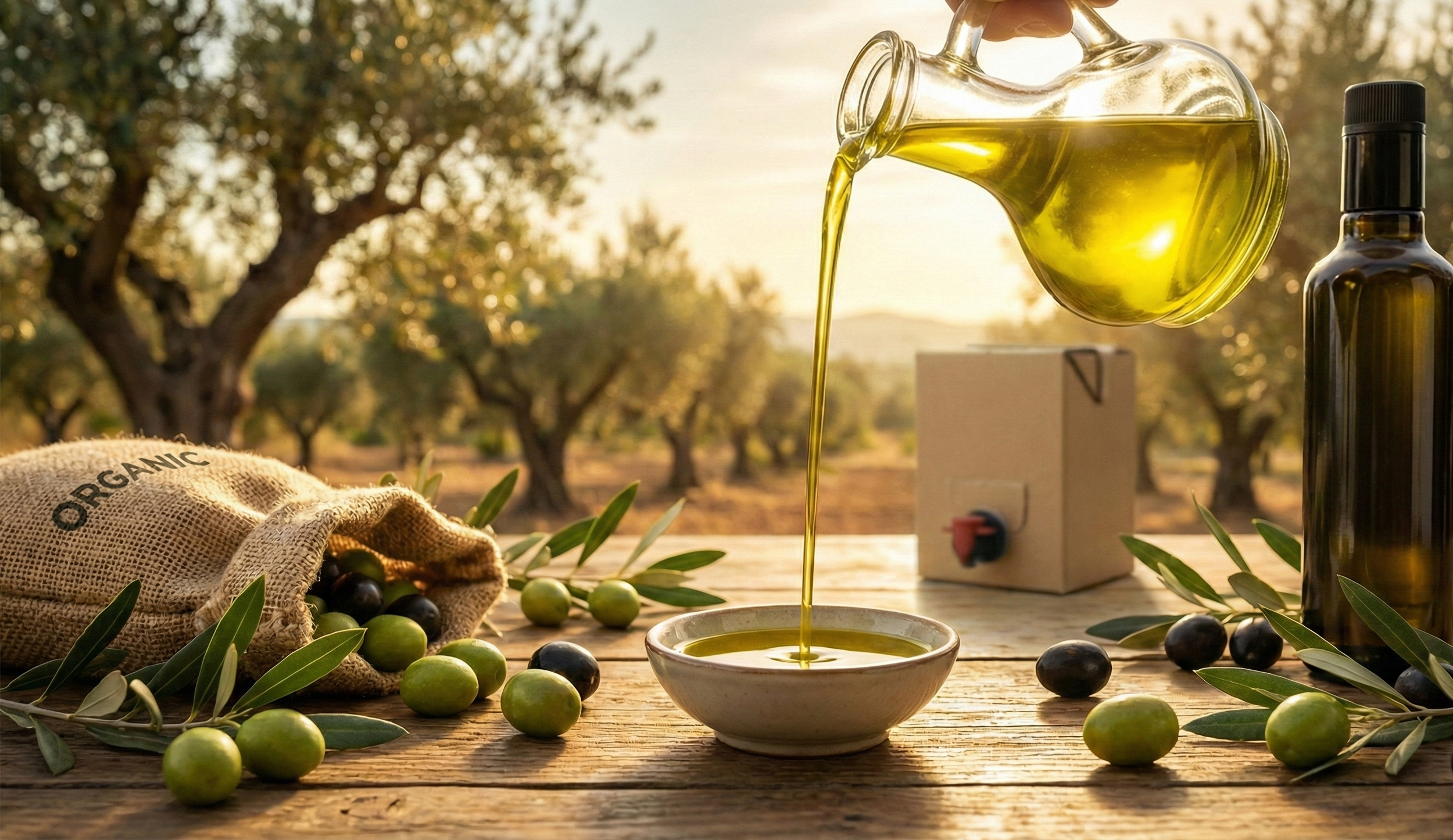
If you are a buyer in the food industry, you know the headline: Olive Oil is no longer just a commodity; it is a luxury asset.
The last three years have reshaped the global olive oil map. Unprecedented droughts in Spain (the world’s largest producer), shifting weather patterns in Italy, and rising temperatures across the Mediterranean have created a “Perfect Storm” for supply. Prices have fluctuated wildly, and availability of true Extra Virgin grade oil has become a battleground.
Yet, consumer demand remains unbreakable. The “Mediterranean Diet” is not a fad; it is the bedrock of healthy eating in the UK. As we move through 2026, the market is splitting. On one side, mass-market blends are compromising on quality to keep prices low. On the other, premium brands are doubling down on Organic Extra Virgin Olive Oil (EVOO), positioning it as a high-value functional food.
At Impact Foods, we have navigated these turbulent waters to secure a stable, high-purity supply of Organic EVOO. This guide is written for procurement managers, NPD teams, and cosmetic formulators who need to understand the new rules of the “Liquid Gold” market.
1. The Chemistry of “Extra Virgin”: It’s All in the Acid
To the average consumer, “Virgin” and “Extra Virgin” are just marketing terms. To the B2B buyer, they are strict chemical definitions that determine shelf life, flavor stability, and legal labeling.
The acidity Threshold
The primary marker of quality is Free Fatty Acidity (FFA).
- Extra Virgin (EVOO): Must have an FFA of less than 0.8%. This indicates that the olives were harvested fresh and pressed immediately (cold pressed) without degradation.
- Virgin Olive Oil: Can have an FFA of up to 2.0%. This suggests slightly riper fruit or a delay in pressing.
- Lampante (Refined) Oil: High acidity oil that must be chemically refined to be edible. It has no flavor and no health benefits.
Why FFA Matters for Manufacturers: Low acidity isn’t just about taste; it is a proxy for Oxidative Stability. An oil with 0.2% acidity (like Impact Foods’ premium stock) will resist rancidity far longer than an oil sitting at 0.79%. If you are using olive oil in a shelf-stable product (like crackers, dressings, or marinated vegetables), sourcing high-stability EVOO is crucial to prevent “off notes” developing three months down the line.
The “Cold Pressed” Mandate
Heat is the enemy of flavor and nutrition. True EVOO is extracted purely by mechanical means at temperatures below 27°C (80°F).
- The Impact Foods Standard: We ensure our oil is Cold Pressed. Industrial extraction often uses higher heat to squeeze more oil out of the paste, but this destroys the delicate polyphenols and raises the peroxide value.
2. The Polyphenol Powerhouse: Beyond Fat
In 2026, we are seeing a shift in how olive oil is marketed. It is moving from the “Condiment” aisle to the “Supplement” shelf.
High-quality EVOO is a functional food because of its Phenolic Compounds.
- Oleocanthal: A natural anti-inflammatory compound that mimics the mechanism of ibuprofen. It gives high-quality oil its characteristic “peppery scratch” at the back of the throat.
- Hydroxytyrosol: One of the most potent antioxidants found in nature. It protects blood lipids from oxidative stress (a legally approved health claim in the EU/UK).
The NPD Opportunity: Brands are now launching “High Phenolic” olive oils explicitly for health shots. If you are formulating a “Heart Health” supplement or a premium “Functional Dressing,” you need an oil with a Certificate of Analysis (CoA) that verifies high polyphenol counts. Standard supermarket oil often has these compounds filtered out to create a bland taste.
3. Sourcing Strategy: The Rise of Tunisia & The New Origins
For decades, “Italian” and “Spanish” were the only origins that mattered. But climate change has forced the industry to diversify.
The Spanish Drought Impact
Spain historically produced 50% of the world’s olive oil. Recent mega-droughts have slashed their output, causing global shortages. This has forced buyers to look for more resilient origins that offer better value without compromising quality.
The Tunisian Renaissance
Tunisia has emerged as a powerhouse for Organic olive oil.
- Pesticide-Free by Tradition: In many Tunisian groves, traditional farming methods are still used. The trees are spaced widely apart to survive arid conditions, which naturally reduces the need for chemical fertilizers or pesticides.
- Flavor Profile: Tunisian Chemlali and Chetoui cultivars offer a robust, fruity profile that rivals the best Italian oils but often at a more competitive price point.
- Impact Foods Strategy: We have diversified our supply chain to include robust origins like Tunisia and Greece alongside traditional producers, ensuring we don’t stock out when one region suffers a harvest failure.
4. Technical Applications: Manufacturing with EVOO
Using Extra Virgin Olive Oil in industrial processing requires technical know-how.
A. The Smoke Point Myth
There is a pervasive myth that you cannot cook with EVOO.
- Fact: High-quality EVOO has a smoke point of around 190°C – 210°C (375°F – 410°F). This is higher than the standard deep-frying temperature (180°C).
- Stability: Because EVOO is rich in monounsaturated fats (Oleic Acid) and antioxidants, it is actually more stable under heat than seed oils like sunflower or soybean, which oxidize rapidly into toxic aldehydes when heated.
- Application: It is perfectly safe and stable for industrial baking (focaccia, crackers), roasting (vegetable snacks), and sautéing sauces.
B. Emulsification in Dressings
EVOO has a distinct viscosity.
- Challenge: It can solidify in the fridge (winterization).
- Solution: For refrigerated dressings/dips (like pesto or hummus), we can advise on blending ratios or “winterized” filtration options to maintain pourability at low temperatures.
C. Preservation (Confit)
Olive oil is a natural preservative.
- Application: High-end brands are moving away from brine and vinegar for preserving artichokes, sun-dried tomatoes, and peppers. “Packed in Organic Extra Virgin Olive Oil” is a premium claim that justifies a higher price point because the consumer uses the oil as a dressing after eating the vegetables.
5. The Cosmetic Sector: “Liquid Gold” for Skin
The food industry isn’t the only buyer. The beauty industry is rediscovering olive oil as a “Clean Beauty” hero.
Squalene Content
Olive oil is one of the richest plant sources of Squalene, a lipid that mimics the skin’s natural sebum.
- Skincare: It is an excellent emollient for dry skin formulations, eczema creams, and anti-aging serums.
- Haircare: It penetrates the hair shaft better than many silicone alternatives, making it a key ingredient in “Natural Repair” hair masks.
Soap Manufacturing (Castile Soap)
True Castile soap is made exclusively from olive oil. With the backlash against palm oil (due to deforestation), manufacturers are returning to olive oil bases for luxury bar soaps and liquid washes. Impact Foods Supply: We supply bulk drums of Organic EVOO specifically for cosmetic manufacturers who require “Food Grade” purity for their “Skin Food” products.
6. Fraud Prevention: The “Fake Oil” Epidemic
It is an uncomfortable truth: Olive Oil is one of the most adulterated food products in the world. Common fraud techniques include:
- Dilution: Mixing expensive EVOO with cheap hazelnut, soy, or sunflower oil.
- Mislabeling: Selling “Lampante” (rotten) oil that has been chemically deodorized as “Extra Virgin.”
- Old Oil: Mixing fresh harvest oil with rancid oil from two years ago.
The Cost of Cheap Oil: If you see a wholesale price that looks “too good to be true” in 2026, it almost certainly is. Buying adulterated oil puts your brand at risk of recalls and consumer lawsuits.
The Impact Foods Guarantee: We operate a Zero Tolerance policy on fraud.
- Traceability: We know exactly which cooperative pressed the oil.
- Testing: We conduct independent lab testing for acidity, peroxide value, and UV absorption (K232/K270) to detect refinement or age.
- Organoleptic Testing: Our oils are tasted by certified panels to ensure they are free from defects (fusty, musty, or rancid notes).
7. Market Trends 2026: The “Premium Tier”
As the price of basic olive oil rises, the “middle ground” is disappearing. The market is polarizing.
Trend 1: “Early Harvest” Oils
Chefs and gourmets are demanding “Early Harvest” (Agoureleo) oil. This is made from green, unripe olives.
- Yield: The yield is very low (it takes more olives to make a litre), so the price is high.
- Flavor: The flavor is intensely grassy, bitter, and pungent. This is the oil used for finishing—drizzled over soup, ice cream, or sourdough.
Trend 2: Infused Oils
To stretch the volume of premium oil, manufacturers are creating infused lines.
- Flavors: Lemon, Basil, Chili, and White Truffle.
- Base: Using a high-quality organic mild EVOO as a carrier for natural extracts allows brands to offer a premium product at a controlled margin.
Trend 3: Sustainable Packaging
The “Bag-in-Box” format (3L and 5L) is exploding in retail.
- Why? It protects the oil from light (which destroys antioxidants) and oxygen (which causes rancidity). It significantly extends the shelf life after opening compared to glass bottles.
- Wholesale: We supply bulk Bag-in-Box formats for food service clients who want to reduce glass waste.
8. Conclusion: Quality is the Best Hedge
In a market defined by scarcity, quality is your best insurance policy. Cheap oil oxidizes. Cheap oil ruins formulations. Cheap oil damages reputations.
By partnering with Impact Foods, you are securing a supply line of Certified Organic Extra Virgin Olive Oil that withstands scrutiny. Whether you are baking artisan crackers, formulating a night cream, or bottling a premium dressing, our oil delivers the stability, flavor, and functionality your customers demand.
Secure your supply of Liquid Gold.